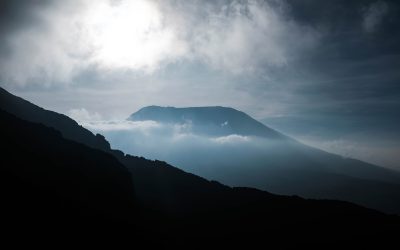
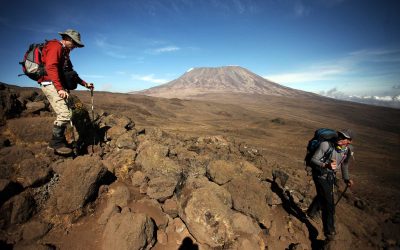
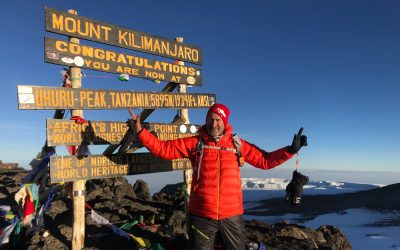
Kilimanjaro National Park, covering 1 688 square kilometers, is home to Africa’s highest mountain. Rising to a high 5 895 kilometers, Kilimanjaro is not only one of the highest mountains, but is also the world’s largest free standing volcano. With not one but three volcanic holes, Kilimanjaro is a snowy sight to behold.
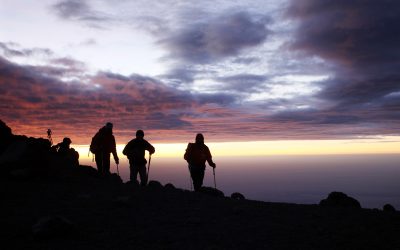
The journey up Kilimanjaro not only offers impeccable views of the Tanzanian savannah that surrounds it, but also harbours layers of diverse vegetation. The stem of Kilimanjaro is home to mountain forests, rich with fauna and flora. As one climbs higher, the forest transforms into more of a moorland and grassland belt, then shifting into a snowy desert devoid of flora as a result of the cold temperature. The summit stacks heaps of snow all year round that crystalize into glaciers as the temperatures remain below freezing. The dramatic diversification is brought by the temperature change due to elevation, making this a memorable walk that allows adventurers to marvel at this natural spectacle.
Kilimanjaro is home to an incredible amount of animal species, including 140 mammal species that consist of 25 antelopes, 25 carnivores and 7 primates. The park also fosters 179 various bird species and 24 bat species.
The best way to experience our adventure world… is to join a trip!